Democracy by Decree: The Mediterranean Identity Erased by Laws of Exception
When emergency decrees and special commissioners become the norm, democracy ceases to function.
In the heart of the Mediterranean, the island of Sardinia has become a laboratory for legal and material dispossession. Utilizing the shield of emergency decrees and special exemptions, the Italian State and multinational corporations are dismantling the rural economy and privatizing protected coastlines. If the erasure of territorial laws and rights can be executed with such ease, by decree, in the very center of the supposedly civilized Western world, it means that no ordinary protection keeps any of us safe, wherever we may be.
The Theft of Representation and Political Disarmament
The process of forced dispossession in Sardinia begins with the neutralization of its political representation, implemented to stifle any attempt at institutional self-government from the outset. A fundamental tool for achieving this purpose is the regional electoral law. Designed in agreement with the central secretariats of Italian political parties, it introduced anti-democratic threshold barriers in a territory rich in differences and specificities. This barrier, combined with a pervasive propaganda machine based on favors, clientelistic logic, and welfare promises, has forced endemic and independentist forces into isolation or absorption within national coalitions.
The result has been the systematic contamination of Sardinian parties, starting with the Sardinian Action Party (Partito Sardo d’Azione) founded by Emilio Lussu. The factions that choose to remain independent face the impossibility of participating in the political arena without bending to the dirty rules of the central system, which feeds careerism, individualism, and toxic dynamics.
This democratic deficit is dramatically amplified on a supranational scale. In European Parliament elections, Sardinia is historically paired in a single macro-constituency with Sicily, whose significantly higher population density effectively nullifies any opportunity for the Sardinian people to elect direct representatives capable of defending their specific interests in Brussels. Faced with this power vacuum, the local political class has adopted a strategy of total disengagement: regional representatives choose the path of self-absolution, justifying their inertia with the formula “it is not our decision” and passively submitting to orders from hierarchically superior administrative levels—be they Roman decrees or European regulations. The rare legal appeals and regulatory attempts are deliberately weak, presented merely to be rejected so that blame can be shifted elsewhere.
From Historical Exploitation to Energy Speculation
Historically integrated into central dynamics with subordinate functions—as a mineral resource to be extracted, a timber reserve at the expense of local forests, a toxic backyard, a military outpost, a periphery for exiles, and a seasonal playground for luxury tourism—Sardinia has suffered a significant worsening of this well-established colonial role with the advent of the ecological transition. This vast financial operation has decreed the island’s utility for multiple strategic resources, transforming it into the ideal bargaining chip for the central government to satisfy foreign demands.
As is happening across most of southern and central Italy, the Italian State has paved the way for private corporations through emergency government decrees. Protected by executive actions and endorsed by judicial rulings, private companies can now expropriate and legislate over local territories, denying residents the constitutional and statutory right to defend their environmental, cultural, and landscape assets. This deprivation of rights does not merely invalidate the grievances of citizens; it strips public entities of their precise institutional duties of territorial protection.
The most egregious example is the precedent set by the ERG mega-wind project. Despite total and formal opposition expressed by the Ministry of Culture, the Ministry for Ecological Transition (MASE) led by Roberto Cingolani (now CEO of Leonardo) found complete alignment within the Prime Minister’s Office. There, Prime Minister Mario Draghi adopted MASE’s stance, authoritatively approving the project through a resolution of the Council of Ministers that voided all negative technical opinions, sealing the definitive downgrade of historical heritage and landscape protection to a second-order priority behind the demands of massive industrial groups.
Rural Dismantling and Livestock Culling
In recent years, the imposition of sacrifices and deprivation of rights perpetrated for the penetration of renewable energy plants has expanded into other sectors. Since last year, a targeted assault on the rural economy has manifested through decisions that damage and halt the development of agricultural and livestock heritage in the hinterland. The most striking case is that of bovine dermatitis. Using EU Regulation 2016/429 (Animal Health Law) as a legal shield, health authorities apply the radical measure of “stamping out” (the total slaughter of herds) upon detecting a single positive case of Lumpy Skin Disease (LSD). Healthy herds of endemic cattle, raised in the wild, are entirely massacred so as not to taint the commercial registries of continental markets, while local politicians merely shift the blame onto European regulations.
Mandatory vaccination campaigns are imposed on herders, causing real-world abortions, sterility, and calf mortality, without saving the surviving animals from the risk of preventative culling. Those who ask for scientific evidence or guarantees see dozens of law enforcement officers in riot gear descend upon their farms, forcing the entry of veterinarians and driving away neighbors and solidarity committees gathered to show support. This military management of a basic health emergency is perfectly aligned with a calculated plan to destroy the island’s autonomous survival resources and promote the aggressive depopulation of the countryside. Traditional businesses are forced to depend on state compensations and political favors; fields are surrendered under financial pressure or threat, while financial vultures and criminals of every kind and rank prosper.
Coastal Extractivism: The Cala Finanza Case
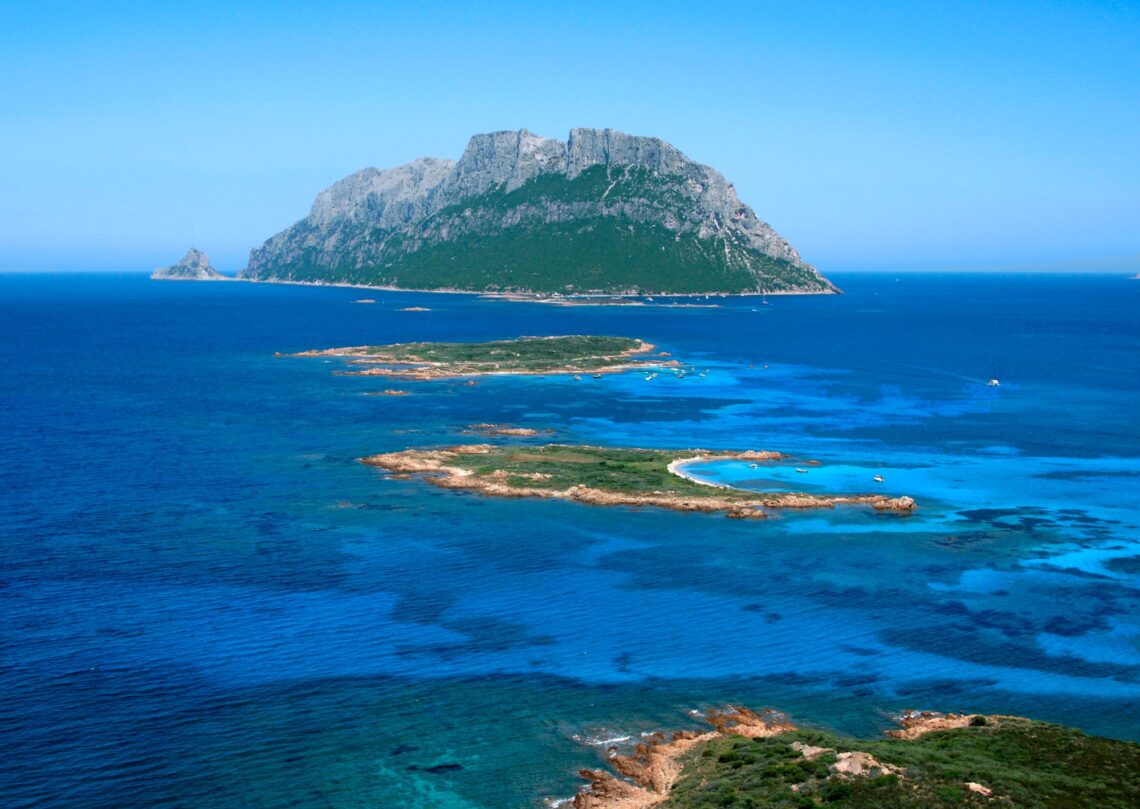
The model of hierarchical bypass has recently begun to find its most devastating and shameless application in the luxury real estate sector at Cala Finanza, in the municipality of Loiri Porto San Paolo, Gallura. Here, the Milanese company Tavolara Bay s.r.l. and the Fasano Group, a Brazilian multinational, have planned the privatization and development of approximately 50 hectares of coastline subject to integral conservation restrictions, projecting a 5-star hotel, 30 villas, a golf course, and yacht berths in a protected marine area.
To understand how an area of such high environmental value in the center of the Mediterranean can be attacked by multinationals, one must look inward, not outward. The operation was legally enabled by a resolution of the local municipal council, which voted to rezone the area from a protected zone to a tourism zone. Although the subsequent services conference gathered five insurmountable negative opinions from the Superintendency of Sassari, the State Forestry Corps, and three General Directorates of the Autonomous Region of Sardinia, the project was authorized in Rome.
On February 9, 2026, the Prime Minister’s Office, exploiting the exemptions of the single ZES (Zonë Ekonomike e Veçantë), issued the final authorization to greenlight the works, erasing the entire Sardinian system of protections. On the ground, citizens found themselves facing fences blocking access to the beach and protected junipers felled to open roads, all within a construction site lacking the mandatory project notice board. Faced with this abuse and no longer trusting public institutions, the population sought the intervention of activists and committees, only then discovering the betrayal of their own mayor, who acted as a facilitator to legitimize the operation.
Media Manipulation and Civil Society’s Response
To make this occupation palatable, national mainstream media execute a fierce smear campaign. Sardinian resistance is systematically blamed and painted as retrograde and anti-economic, accusing citizens, committees, and herders of being irresponsible and causing various problems for the entire Italian State. This narrative divides the social fabric: the urbanized majority of the population tends to remain trapped in the limbo of “progress” propaganda, while the inhabitants of rural areas, who experience expropriations, culling, and the devastation of their workplaces firsthand, develop a lucid and vigilant consciousness of their colonial condition.
Sardinians, however, flatly disprove the attempt to pass them off as ignorant rustics: the island boasts a historical, cultural, and intellectual density expressed by figures of international renown. It has given birth to prominent personalities, including a Nobel laureate, scientists, jurists, artists, architects, politicians, and philosophers, extending into the worlds of fashion, entertainment, and sports. Today, that same culture that nurtured so many excellences confronts a brutal reality. The debate is alive, and fear for the territory’s future is tangible.
The urgency bypasses the island’s borders to engage directly with communities and citizens across Europe who find themselves undergoing the same logic of coercion over their lands and fundamental rights. To the Sardinians forced to emigrate to find opportunities, but who recognize the genetic and cultural heritage of Sardinia in their success, we ask you to place your skills and authority in your respective fields at the service of the Sardinian people who, despite everything, refuse to surrender.
To anyone who senses the gravity of this drift, we ask you to echo our voice.

